

Xperiel's RWW development environment and Rox graphical programming language
My Process
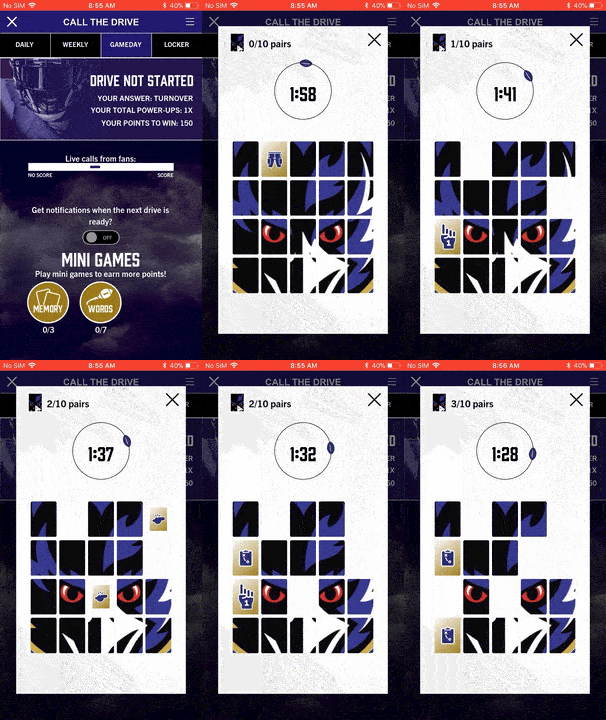
I started this project researching similar games on the App Store. I spent a while playing these games to discover which features I liked, and which made the games feel engaging and fun to play multiple times. Our goal was to create short experiences that could be completed between drives, yet that were engaging enough that fans would return to play often.
With these features in mind, I shared my ideas with the graphic designers as they came up with a visual language specific to each team.
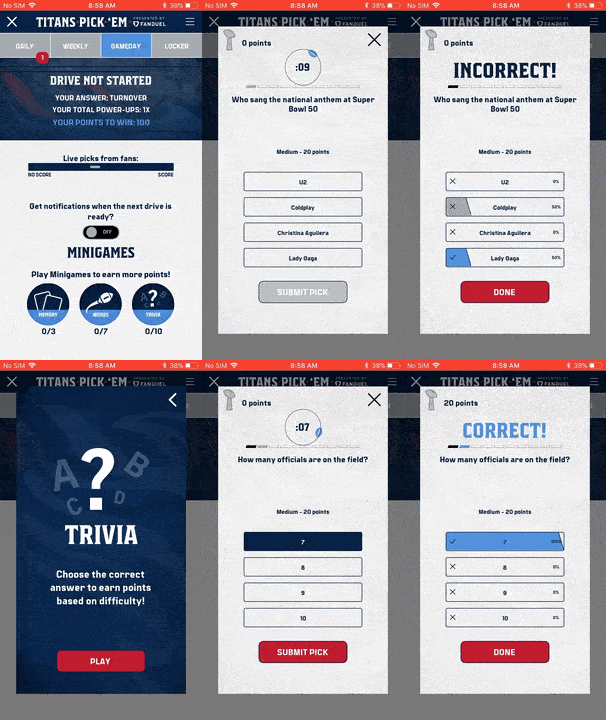
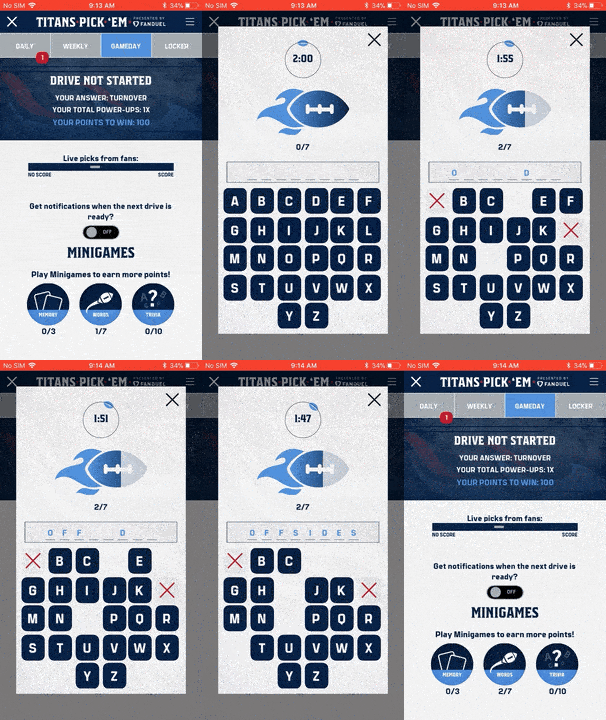
Then I built out the architecture. For Trivia, this included some backend processing in our Diagram Editor because we wanted to display the percentage of users who also chose the same answer as the player. We needed to store and calculate that data centrally and then to pass it to users as they played. The Memory and Words games did not require any server communication and thus were built only in the Screen Editor and run soley on the device.
After nailing down the game play, it was time for internal testing and gathering feedback. This included soliciting feedback from players as well as setting up sessions where I watched people play. Among the things I was looking for were: the key points of enjoyment, any signs of frustration, bottlenecks in the game play, performance issues, how many rounds they played, and how much time spent playing. I made several iterations of improvements based on these observations. After deployment to the NFL Teams' Apps, I continued to monitor the games and make changes based on feedback received from the teams and fans.
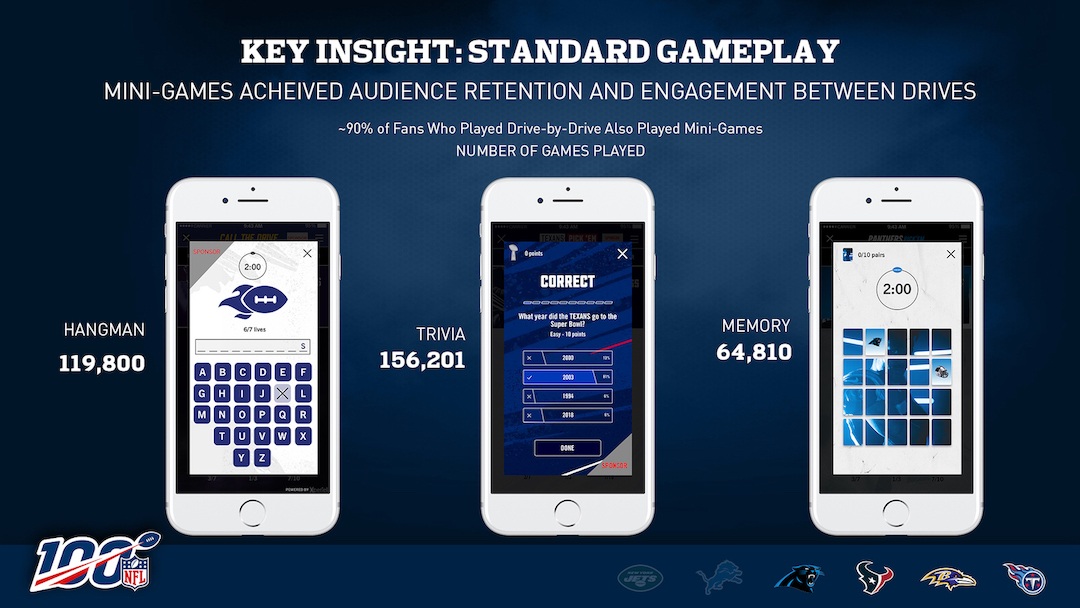
The response was very positive, with analytics showing that the games achieved the desired audience retention and engagement between drives. 90% of fans that were making drive predictions were also playing the Mini-Games in between.